
For B2B teams
Built for companies that need to explain complex products, services and expertise clearly.
AI Site Factory
Turn scattered brand materials, content and assets into a scalable, SEO-ready and AI-search-friendly marketing website system.
Lumethica AI Site Factory combines content architecture, brand assets, reusable components, SEO/GEO structure and AI-assisted production into one repeatable pipeline for B2B companies that need to launch, maintain and scale their marketing site with control.

Built for companies that need to explain complex products, services and expertise clearly.
Designed for Google, AI answer engines, internal linking, structured content and source-of-truth pages.
Reusable sections and page templates make the website easier to maintain and expand.
New services, industries, insights and case studies can be added without rebuilding the site from scratch.
Free ebook
Download the AI Site Factory ebook and learn how to turn scattered decks, PDFs, case studies and old pages into a clearer website system for sales, content growth and SEO / AI-search readiness.
Before / after
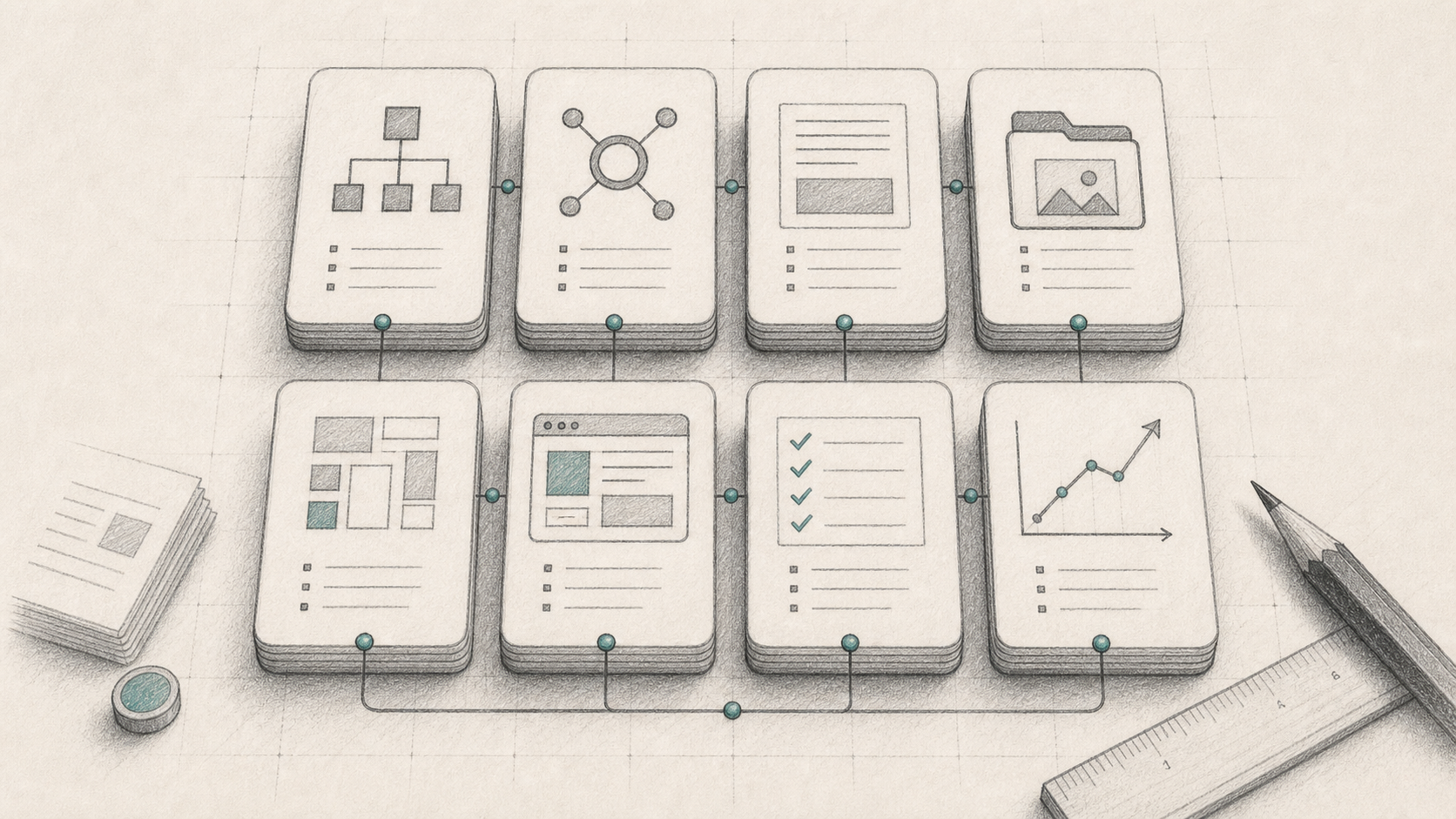
Most B2B websites break because content, assets, SEO and page structure are handled as separate one-off tasks. AI Site Factory turns them into one controlled production system.

The result is not just a new website. It is a cleaner operating model for content, brand, SEO and growth.
What the client gets
A complete website system - not only a visual redesign.
Information architecture, sitemap, page types, URL structure and launch roadmap.
IA / Sitemap / RoadmapMetadata, canonical structure, FAQ patterns, schema, internal links, sitemap and llms.txt-ready architecture.
SEO / GEO / AEOReusable page structures, content rules, service pages, insights, FAQ and conversion copy.
Pages / FAQ / CopyOrganized source files, exports and public-ready assets with clear publishing rules.
Source / Export / PublicReusable sections for hero, services, proof, insights, CTA, FAQ, logos and product pages.
Reusable UIA working, responsive website built in a scalable frontend or Webflow / Next.js setup.
Live SiteQA checklist, redirects, SEO checks, performance review and publishing handoff.
QA / Redirects / LaunchNext pages, content opportunities, SEO/GEO improvements and lead-generation experiments.
Next ActionsEach deliverable is designed to help your team launch, maintain and scale the website after the first release.
What Lumethica implements
We build the layers your marketing site needs to scale with control.
Lead capture, CTA tracking, scorecards, analytics events, content backlog and AI-search visibility checks.
Metadata, schema, internal links, sitemap, robots, llms.txt, FAQ blocks and source-of-truth pages.
Structured content types for homepage, services, industries, case studies, insights, FAQ and contact pages.
Reusable website sections that can be combined into homepage, service pages, insights and product pages.
Logo, colors, typography, imagery, icons, source files, exports and public-ready assets.
Routing, layout, navigation, footer, responsive structure and page rendering.
Each layer is separated so the site can grow without becoming a one-off collection of pages, assets and manual fixes.
Product console
See how scattered materials become a structured website system.
Factory pipeline
A controlled pipeline from raw materials to a scalable website system.
We collect brand materials, existing website content, decks, PDFs, product descriptions, case studies, images and raw assets.
File stackWe organize materials into source, export and public-ready layers so the website has a clean operational structure.
Folder systemWe define sitemap, page types, URL structure, content model, SEO priorities and conversion paths.
Sitemap diagramWe build reusable sections and page templates instead of manually designing every page from scratch.
Component blocksWe prepare metadata, schema, FAQ blocks, internal links, llms.txt, sitemap and AI-readable source-of-truth pages.
Search nodesWe publish the site with clean assets, responsive layouts, QA checks, redirects and analytics.
Deploy checklistWe keep adding service pages, insights, industry pages, comparison pages and conversion experiments.
Growth loopSystem architecture
AI Site Factory separates content, assets, components, configuration and documentation so the website can be updated, expanded and migrated without losing control.
/content
  /pages
  /services
  /solutions
  /industries
  /case-studies
  /insights
  /glossary
  /faq

/assets
  /source
  /exports
  /public-ready

/components
  Hero
  ServiceGrid
  FAQ
  CTA
  Metrics
  LogoCloud
  CaseStudy
  InsightCard
  ProductDemo

/config
  site.config
  seo.config
  routes.config
  brand.config
  locale.config

/docs
  content-rules
  brand-rules
  seo-checklist
  launch-checklist
migration-mapThis makes the website easier to replicate, maintain and scale for new brands, markets, services and content clusters.
LLM connection layer
AI Site Factory is model-agnostic. The website system can connect to Claude, ChatGPT, Codex, Gemini, Mistral, local models and other LLM tools through a controlled content and workflow layer.
Model options
Use the models and tools your team already trusts for drafting, review, code assistance, local workflows or content operations.
 Claude
 Gemini
 Mistral
 Ollama
 Hugging Face
 GitHub
How it connects
The production layer separates content rules, prompts, source materials, review states and publishing logic from the model provider.
SEO, GEO and AEO
The next website challenge is not only ranking in Google. It is being clearly understood by AI systems.
Pages are built with clear definitions, FAQ, internal links and source-of-truth sections.
Each important page can include metadata, FAQ schema, breadcrumbs and structured service information.
The site can include sitemap.xml, robots.txt and llms.txt to make key pages easier to discover and interpret.
Services, industries, comparison pages, glossary and insights build authority around specific categories.
Pages are connected around topics, services, industries and buyer questions instead of existing as isolated URLs.
The system creates a backlog for AI-search prompts, content gaps, query opportunities and page improvements.
Packages
Start with a blueprint, launch a focused site system or scale your website into an ongoing AI-search growth engine.
A focused diagnostic and planning engagement for turning scattered materials into a clear website system plan.
A focused production sprint that turns brand, content and assets into a working, scalable website system.
A monthly growth system for expanding the website with new content clusters, pages and conversion experiments.
Best-fit clients
Service pages, product pages, integration pages, guides and comparison content.
Explain complex products, build category authority and create AI-search-friendly pages.
Turn expertise into structured offers, insights, frameworks and lead-generation pages.
Create clear, trustworthy and explainable product journeys for complex services.
Build a repeatable website engine for services, case studies, industries and thought leadership.
Turn founder knowledge, decks and scattered content into a scalable authority website.
Why Lumethica
Lumethica combines product design, AI workflows, content architecture, SEO/GEO thinking and system design. That makes AI Site Factory more than a website project.
We structure the website around user decisions, business workflows and conversion paths.
We use AI to accelerate content, structure and variants - without losing human review and brand control.
We build reusable sections and patterns instead of one-off pages.
We prepare the site to be understood by search engines and AI answer systems.
We deliver documentation, rules and backlog so the website can keep growing after launch.
FAQ
No. AI Site Factory is not a prompt-to-website tool. It is a production system that combines strategy, content architecture, reusable components, asset governance, SEO/GEO structure and AI-assisted content operations.
You can start with a brand deck, existing website, service descriptions, case studies, screenshots, PDFs, product notes or even scattered internal materials. The first step is organizing the source material.
Yes. AI Site Factory can be used to rebuild a website, create a new section, migrate content, restructure pages or create a scalable content system on top of an existing brand.
No. The system can be adapted to the right implementation stack. Next.js is a strong fit for scalable content and SEO, but selected parts can also inform Webflow, headless CMS or other frontend implementations.
A normal website project often focuses on design and launch. AI Site Factory focuses on the operating system behind the site: content model, asset pipeline, reusable components, SEO/GEO structure, launch kit and growth backlog.
No. AI can support drafting, restructuring and variant production, but the system relies on human review, brand rules, content governance and business context.
Yes. The system can prepare structured content, FAQ, schema, internal links, sitemap, robots.txt, llms.txt and source-of-truth pages that make the website easier to understand for search engines and AI answer systems.
The best first step is an AI Site Factory Audit or Blueprint. We map your current materials, page structure, content gaps, SEO/GEO opportunities and first implementation roadmap.
Final CTA
Start with an AI Site Factory Audit and we will map your content, assets, page structure, SEO/GEO opportunities and first implementation roadmap.