AI trust and control layer

Add control, explainability and auditability to your AI systems.

Lumethica adds a practical trust layer to AI products, agents and decision systems: human approval, logs, confidence, risk states, documentation and readiness for enterprise expectations.

Short definition

What is Trust & Control Layer?

A Trust & Control Layer adds explainability, evaluations, audit trails, guardrails and human oversight to AI products and agents.

  • Designed around a real workflow
  • Connected to business data and user outcomes
  • Includes trust and control assumptions
Pain diagnostic

AI cannot scale if nobody can control, explain or evidence it.

As AI moves into products and workflows, teams need more than output quality. They need accountability, approval points, audit trails, failure handling, documentation and transparency.

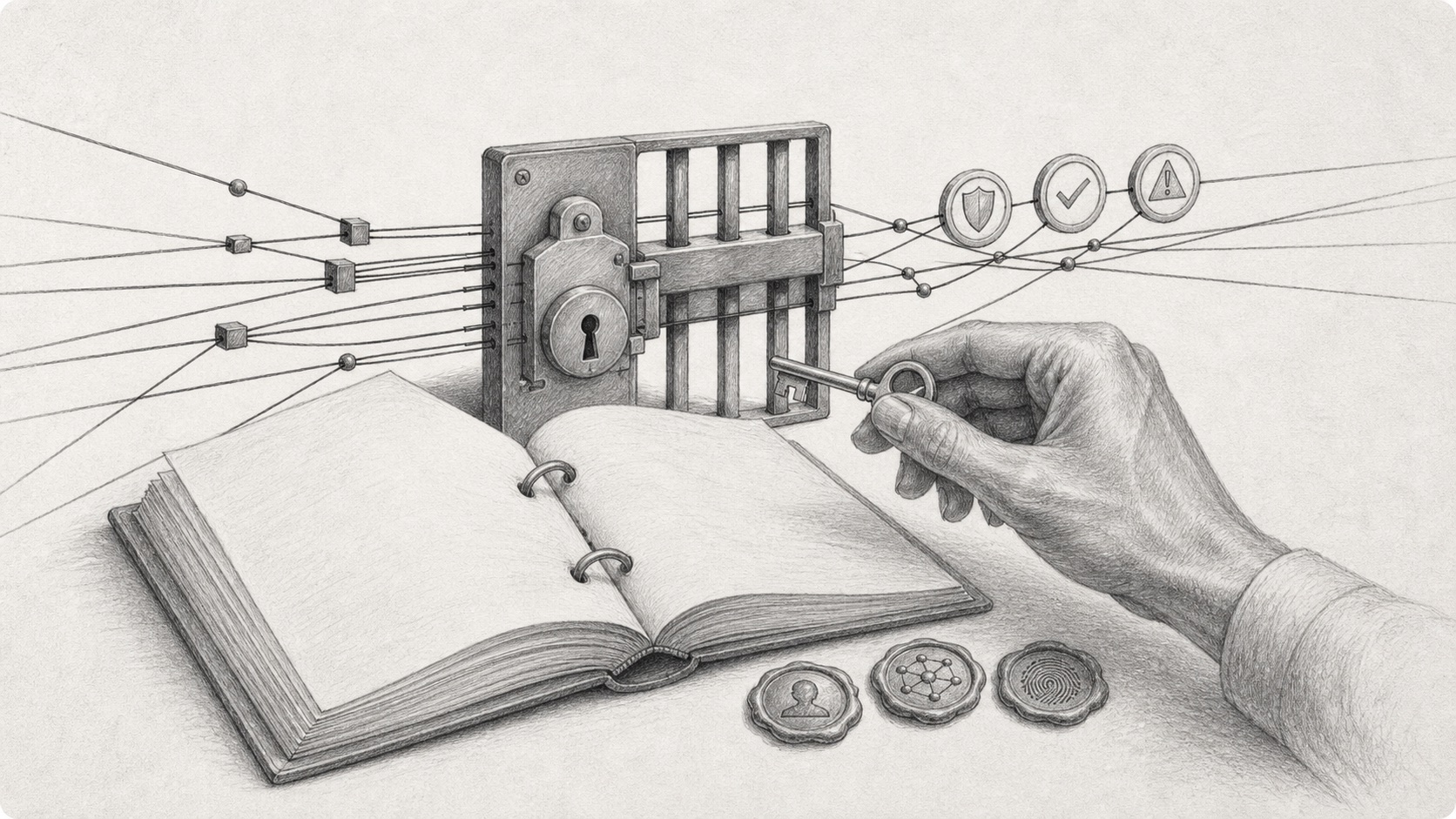
Graphite illustration of a hand holding a key near a lock and audit ledger controlling AI threads
Control layer previewPut approval, auditability and risk control close to every AI action.

Control architecture

Define how AI products, agents or workflows should be controlled.

Human-in-the-loop

Design review, approval, override and escalation patterns.

Enterprise readiness

Make risk, logs and documentation visible to buyers and teams.

What we design

Controls that live inside the product.

  • AI inventory lite
  • Human approval flows
  • Audit trail and interaction history
  • Risk states and escalation paths
  • Confidence and limitation messaging
  • Model/system cards
  • AI output review workflow
  • Incident and rollback scenarios
  • AI Act readiness notes

What you get

02

Approval and override flows

Give humans a clear moment to approve, correct, block or escalate sensitive outputs.

03

Audit trail and evidence design

Show what happened, why it happened and who reviewed it when accountability matters.

04

Risk states and fallback logic

Make uncertainty, limits, failures and handoff paths visible inside the product.

05

Enterprise readiness notes

Prepare the practical control story buyers, teams and compliance stakeholders ask for.

Control principles

Control should match autonomy level.

Trace critical actions

Every important AI action needs a visible record.

Give humans a clear moment

Review, approve, override or escalate without ambiguity.

Show trust states in product

Controls should not be hidden in policy documents.

Process

From autonomy review to implementation roadmap.

1

Risk review

Map autonomy, user impact and system boundaries.

2

Control patterns

Choose approval, logging and escalation patterns.

3

Audit flows

Design evidence and interaction history.

4

Artifacts

Prepare system cards and readiness notes.

5

Roadmap

Define implementation scope and priorities.

Enterprise credibility

Make the answer visible when buyers ask how AI is controlled.

Enterprise buyers increasingly ask how AI is controlled, logged and explained. This layer helps make the answer visible and credible.

FAQ

Common questions.

Is this the same as AI governance?

Not exactly. Governance defines rules and responsibilities. The Trust & Control Layer translates those rules into product UX, workflows, logs and operating controls.

Can this support enterprise sales?

Yes. Enterprise buyers increasingly ask how AI is controlled, logged and explained.

Is this only for high-risk AI?

No. It is useful for any AI system that affects decisions, customers, business processes or regulated data.

Do you provide legal compliance advice?

Lumethica designs operational and product controls. Formal legal interpretation should be validated with legal counsel where required.

Related services

Add control where AI does real work.

Final CTA

Ready to move from AI idea to a working system?

Add a Trust Layer