AI agent development services

Design controlled AI agents for real business workflows.

Lumethica designs AI agents around business processes, tools, permissions, human approval and measurable outcomes - so agents do useful work without creating operational chaos.

Short definition

What is AI Agent Workflow Sprint?

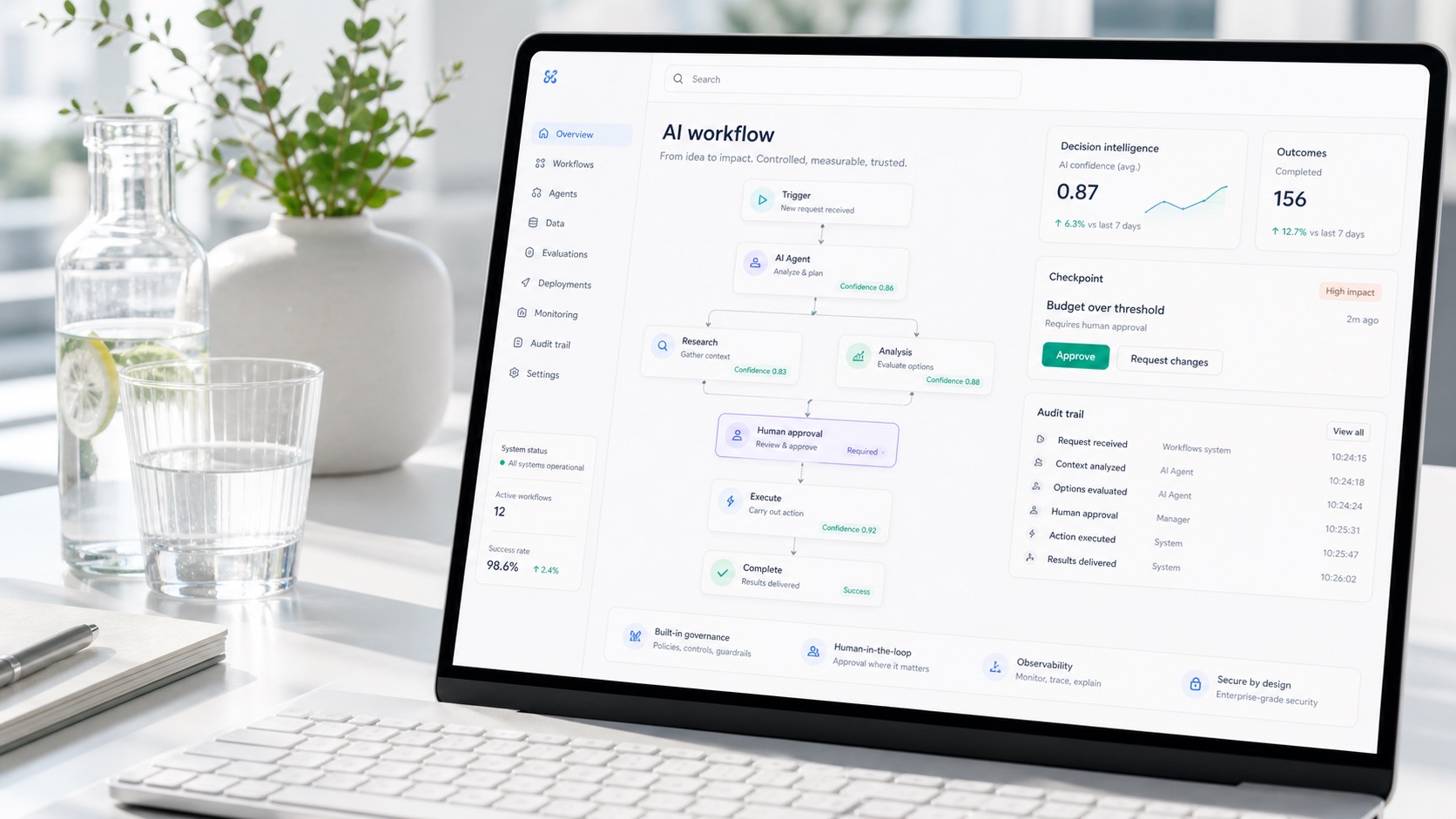
An AI Agent Workflow Sprint defines what an agent can observe, draft, decide and execute, which tools it can use, when humans approve actions and how quality is measured.

  • Designed around a real workflow
  • Connected to business data and user outcomes
  • Includes trust and control assumptions
Pain diagnostic

Most teams do not need more AI experiments. They need controllable AI workers.

Agents become valuable when they have a defined role, clear context, approved tools, boundaries, escalation rules and measurable success criteria.

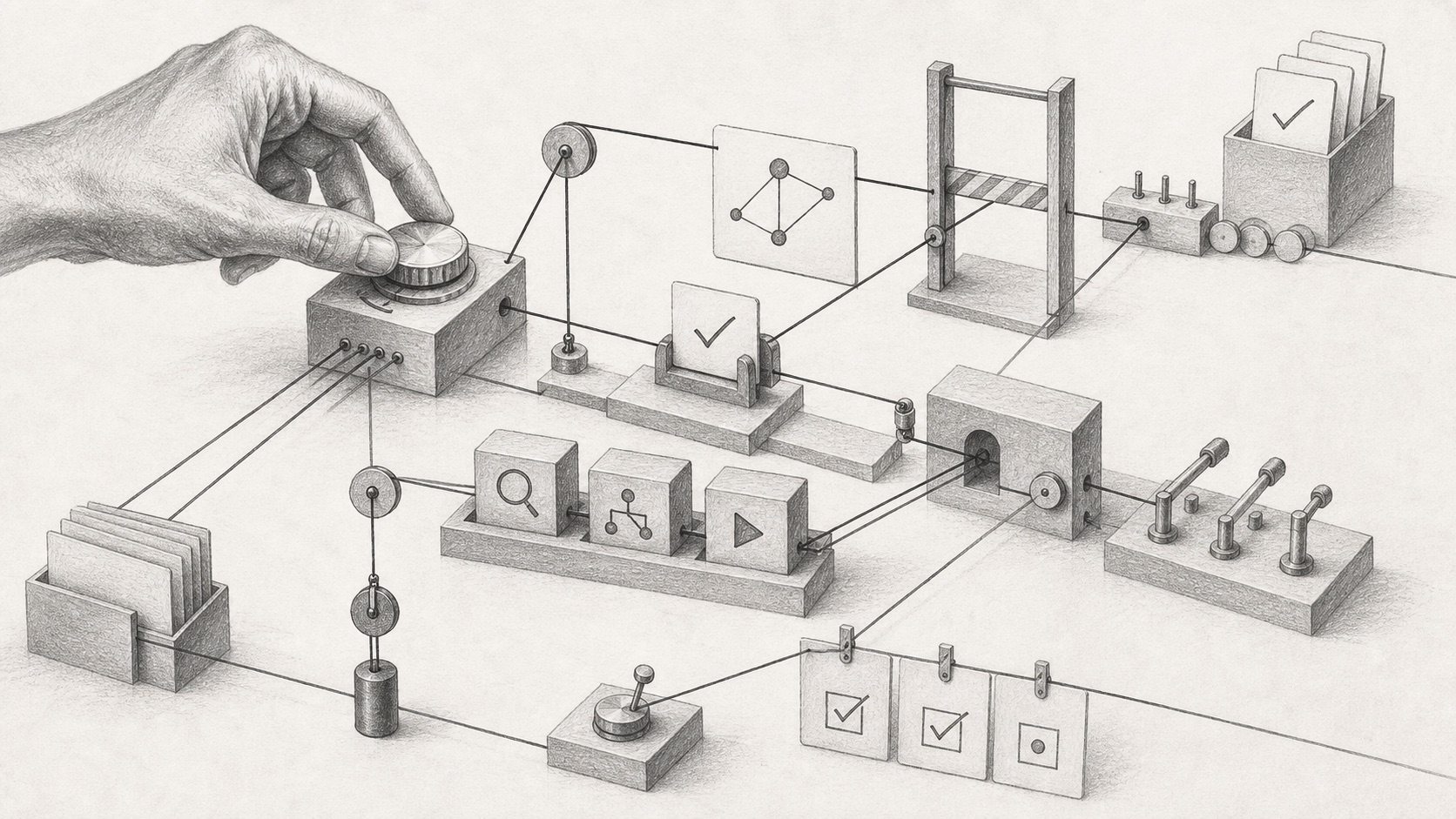
Graphite illustration of an abstract controlled AI agent workflow mechanism
Agent control modelDefine what agents can observe, draft and execute inside visible boundaries.

Agent role

A clear agent responsibility mapped to a business process.

Permission model

What the agent can observe, recommend, draft or execute.

Evaluation loop

Logs, success metrics, failure signals and escalation paths.

What we design

The workflow around the agent, not only the agent.

  • Agent role and goal definition
  • Human + agent + system workflow
  • Tool and API access model
  • Context and knowledge sources
  • Autonomy levels
  • Human approval points
  • Operator experience
  • Audit logs and monitoring states
  • Failure and escalation scenarios

What you get

02

Tool and permission model

Clarify allowed systems, data access, autonomy levels and approval moments.

03

Operator experience

Design how people review, correct, approve and escalate agent work.

04

Evaluation scenarios

Specify success metrics, failure cases, logs and quality checks before rollout.

05

Implementation plan

Leave with a practical rollout path for prototype, pilot and controlled production use.

Process

From process selection to agent rollout plan.

1

Workflow selection

Choose the business process where an agent can help.

2

Role and tools

Define goals, context, tools and system boundaries.

3

Permissions

Set autonomy levels, approvals and escalation.

4

Prototype

Design the agent interface and operator flow.

5

Evaluation

Define logs, metrics and rollout plan.

Trust and control built in

Agents should act inside visible boundaries.

Most business agents should observe, advise, draft or act with approval. Full autonomy is only for narrow, low-risk and well-instrumented workflows.

FAQ

Common questions.

What is the difference between an AI agent and automation?

Automation follows predefined rules. An AI agent can interpret context, plan steps, use tools and adapt within boundaries.

Do agents need full autonomy?

No. In most business contexts, the safest and most useful model is human-supervised.

Can this connect to our tools?

The sprint defines integration assumptions and tool access for CRM, support, document systems, analytics, APIs or internal tools.

How do you measure agent quality?

We define success metrics, evaluation scenarios, failure signals, escalation rules and human review criteria.

Related services

Build the control layer around agents.

Final CTA

Ready to move from AI idea to a working system?

Design an AI Agent Workflow